
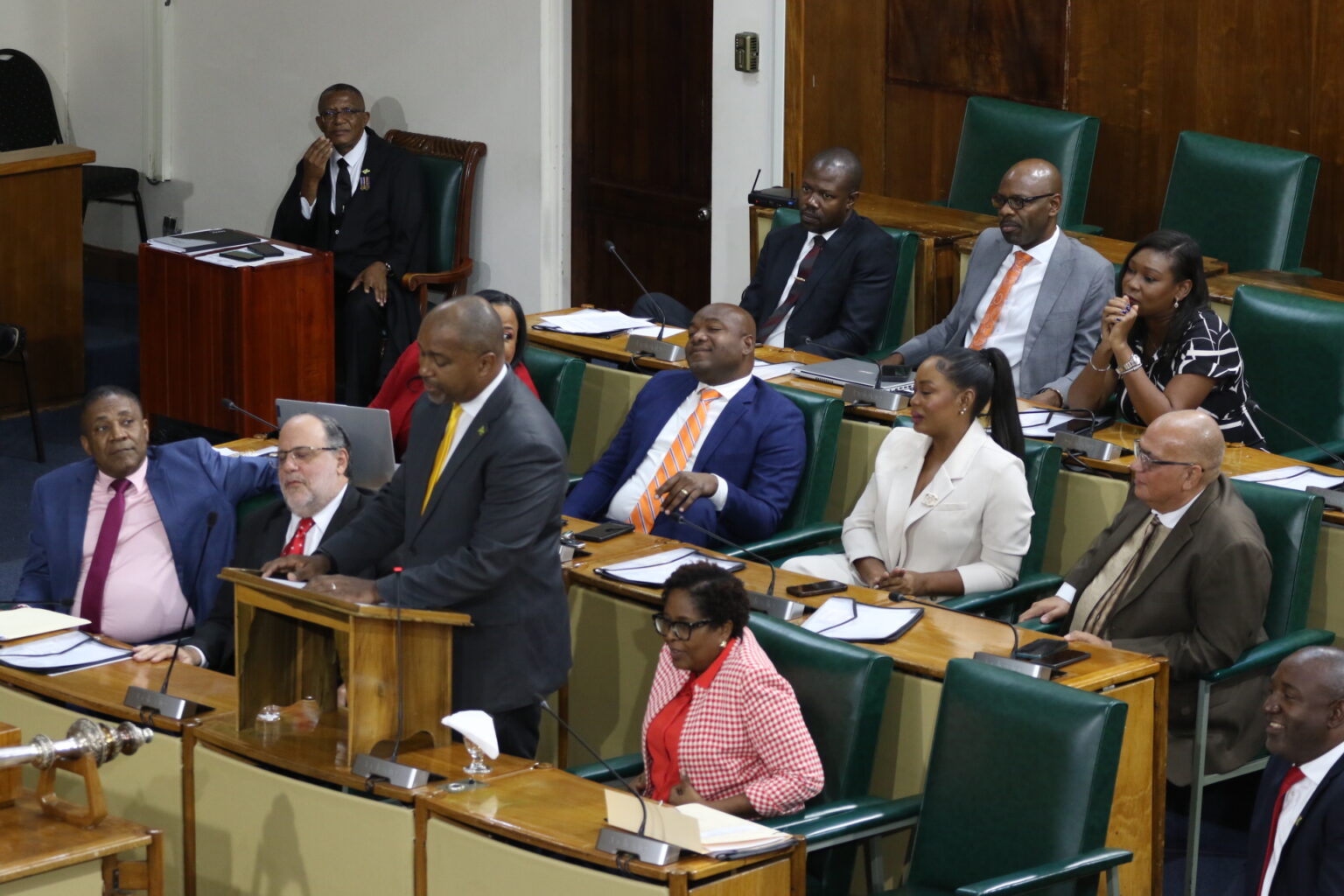
Opposition Spokesperson on Finance, Julian Robinson, today outlined a people-focused alternative to the Government’s new tax measures, arguing that Jamaica can close its fiscal gap without imposing additional burdens on families and businesses still recovering from Hurricane Melissa.
Making his contribution to the Budget Debate in the House of Representatives, Robinson said the People’s National Party believes responsible fiscal management must be balanced with compassion and sound economic judgement during a period of national recovery. “The Government looked at a revenue gap and reached for the easiest tool available: higher taxes on the same people who are already under pressure,” Robinson said. “We looked at the same gap and asked a different question: what can we do that strengthens revenue without placing additional burdens on Jamaicans at the worst possible time?”
Robinson outlined several measures that the PNP believes could generate revenue and support economic recovery without introducing new taxes.
Among the proposals is the implementation of an electronic invoicing system through Tax Administration Jamaica to improve compliance and reduce revenue leakage from existing taxes. Robinson said that improving compliance in the collection of General Consumption Tax and Special Consumption Tax could generate an estimated $8.6 billion in additional revenue through more efficient administration of taxes already owed.
The Opposition has also proposed the introduction of a Digital Nomad Programme, which would allow remote workers to live and work in Jamaica while employed overseas. Robinson said the programme could include a US$2,000 visa fee for a one-year stay, and with a conservative target of 5,000 participants, could generate approximately $1.5 billion in direct and indirect revenue while stimulating broader economic activity.
In addition, Robinson said the PNP proposes targeted transfers from public bodies with strong financial positions, including $1 billion from the Bank of Jamaica’s operational surplus and $1 billion from the Factories Corporation of Jamaica, which is projecting significant profits in the upcoming fiscal year. He noted that these transfers would not compromise the institutions’ ability to carry out their mandates.
Robinson also reiterated the PNP’s commitment to end the annual $11.4 billion withdrawal from the National Housing Trust, arguing that those resources should instead be directed toward the Trust’s core mandate of providing affordable housing, particularly at a time when thousands of Jamaicans are still in need of housing support following Hurricane Melissa.
On the expenditure side, Robinson said the PNP has identified savings through the deferral of non-essential spending. This includes reducing the central government transfer to the Airports Authority of Jamaica by $2 billion for the upcoming fiscal year, by postponing the planned construction of a new corporate head office.
Robinson emphasised that the overall fiscal impact of these proposals would be modest while providing meaningful relief to Jamaicans. “The difference to the debt-to-GDP ratio would be minimal, moving from the Government’s projection of 65.7 per cent to approximately 66.14 per cent,” Robinson said. “In exchange, Jamaicans would be spared $18 billion in new taxes at a time when many are still trying to recover from Hurricane Melissa.”
He said the PNP’s proposals demonstrate that it is possible to manage the country’s finances responsibly while prioritising the well-being of the Jamaican people. “This is about making choices that reflect the moment we are in as a country,” Robinson said. “Recovery should not come at the cost of placing additional pressure on people who are already doing their best to rebuild their lives.”