
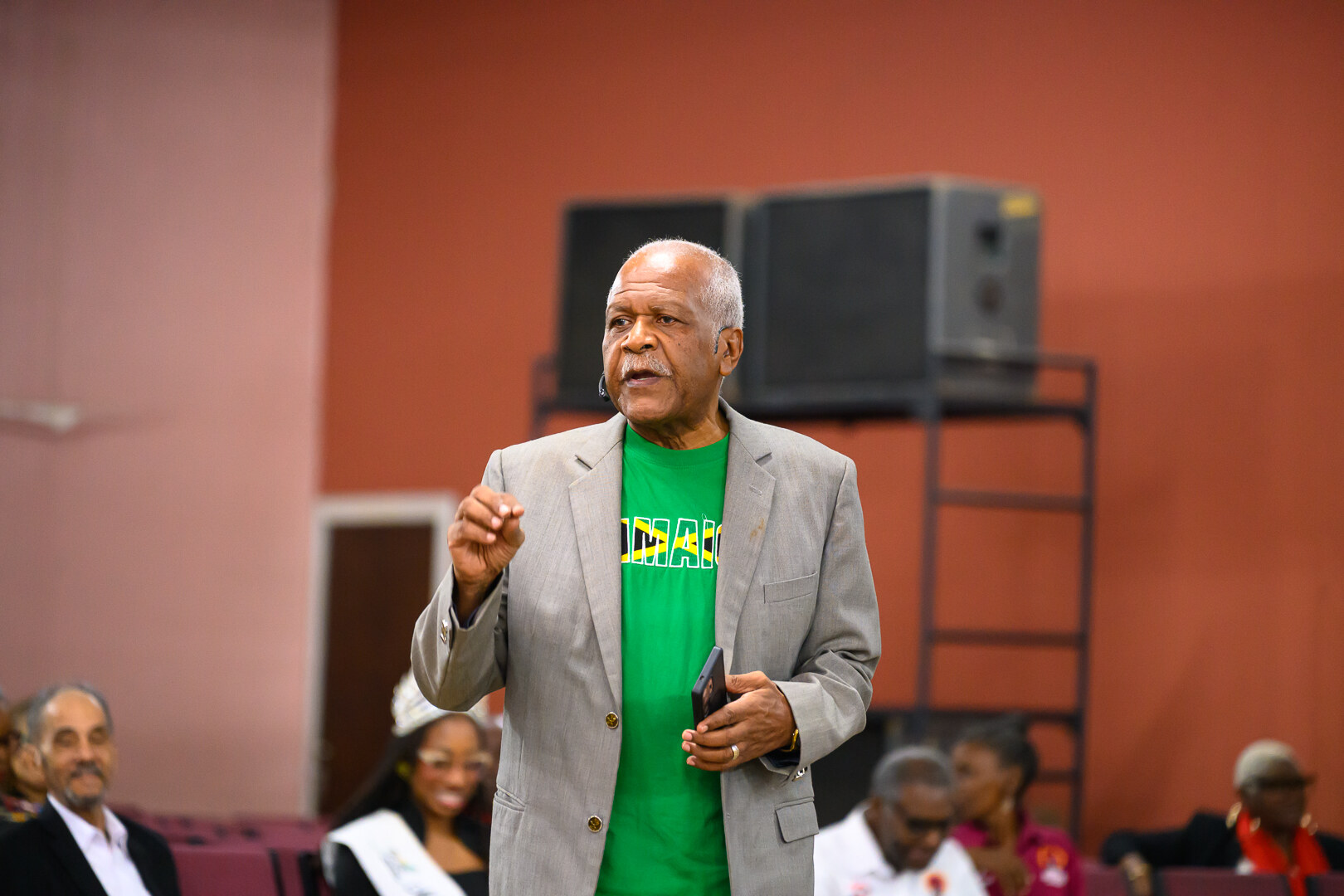
Senior pastor Reverend Al Miller is calling on stakeholders in Jamaica’s reggae industry to reaffirm the genre’s message-driven foundation, which he described as essential to its role in national healing.
Speaking at the annual Reggae Month Church Service, held earlier this month at Fellowship Tabernacle in Kingston and organised by the Ministry of Culture, Gender, Entertainment and Sport through the Jamaica Cultural Development Commission (JCDC), Miller set a reflective tone as he urged practitioners to return to reggae’s roots. The service was held under the theme “Reggae… A Balm in Gilead.”
Drawing on the biblical imagery of healing, Miller said reggae has long served as a source of restoration for the Jamaican people. “Reggae is a balm in Gilead… a balm to make the wounded whole,” he told the congregation, adding that its power lies not merely in rhythm, but in the message carried within the music.
“Reggae has always pointed people to God. Listen carefully to our artistes, so many of them call on Jah, call on God, because they recognise that without Him we can do nothing,” he said.“Yes, it is rhythm. Yes, it is sound. But at the heart of the rhythm is a message that calls a people to look within themselves, to introspect, to examine what is happening in society, to critique injustice, and to create change so that there can be hope.”
Acknowledging generational shifts within the industry and the economic pressures facing many young men, Miller said change should not come at the expense of substance.
“Yes, we are conscious that there is a changing of the guard. A new generation is rising. Some of our icons have moved on. But reggae is that balm, like a bridge over troubled waters,” he said.“We are in a troubled period, and reggae has the opportunity to help carry us across.”
He described the present moment as a critical opportunity for national renewal but stressed that rebuilding must begin internally. “This is the greatest opportunity we have had in decades to rebuild Jamaica, to reset and build the ‘new Jamaica’ we have long spoken about. But the rebuilding must begin in the soul.”
Miller spoke directly to producers and industry leaders, urging them to act as gatekeepers of the music’s message.
“You have a responsibility for such a time as this,” he said. “If a man come and him nuh have no message, nuh give him no play.”
He emphasised that reggae must now speak intentionally to younger generations. “Reggae must bring a message to this generation… a message to our youth and our children. Positive messages that give them hope and help them understand their identity and what God has placed inside of them.”
Drawing on the biblical account in 2 Samuel 18, Miller likened today’s music landscape to a runner who arrived quickly but carried no message. “Whole heap a man a run, but dem no have no message… Don’t run if you don’t have no message,” he said.
He also issued a challenge to the church, encouraging leaders to embrace reggae rhythms as a way to engage younger worshippers. “Tell the church say if uno still a sing dem old songs deh and it nuh have nuh riddim, you have to sing it with riddim… wake up and start run the riddim,” he urged.
Minister of Culture, Gender, Entertainment and Sport, Hon. Olivia “Babsy” Grange, also addressed the gathering, reaffirming the Government’s commitment to supporting reggae’s continued growth while preserving the values that have historically defined the genre.
The service drew diplomats, cultural leaders and industry veterans, including Franklyn Campbell, chairman of the Jamaica Association of Vintage Artistes and Affiliates (JAVAA), and music executive Joe Bogdanovich.
Miller closed with a simple but pointed appeal: “Remember. Reggae is message music. If the music nuh have no message, a nuh reggae… a something else. Run with a message.”